Updated October 2026 · 10 min read
A lever handle is one of the few components in a building that gets touched every day, by everyone. A faucet handle sits in the wettest place in the room. When either one blisters, discolours or works loose after eighteen months, nobody calls the die caster. They call your after-sales line.
That is what makes door hardware and sanitary ware hard programmes. The casting is the cheap part. What the end user sees and judges is the alloy, the polishing, the plating thickness and how tightly the assembly was put together.
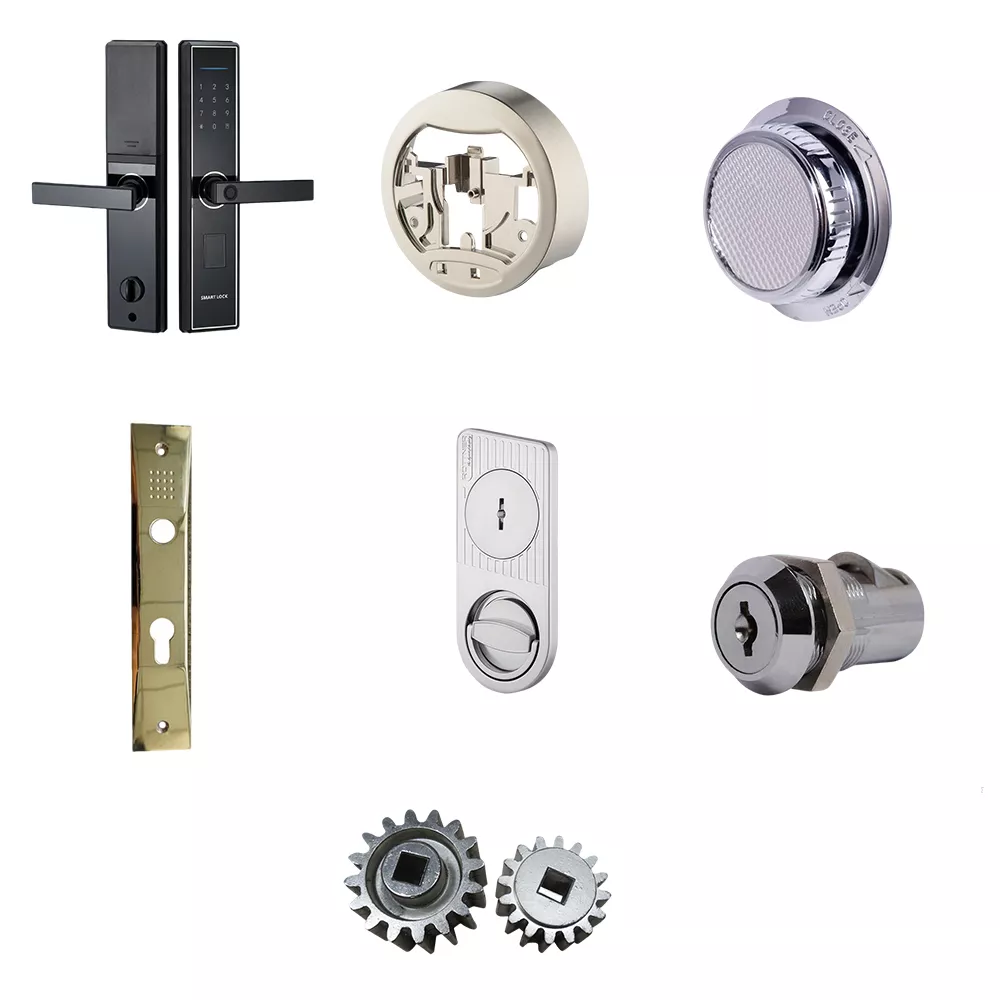
What actually fails, in the order it fails
Listen to a hardware brand’s warranty desk and the complaints sort into a short list.
Plating blisters, or peels off in sheets. Almost always preparation, not the bath. Polish residue, surface contamination or a pre-treatment step that got shortened during a busy week.
The lever droops, or the spindle wears oval. That is load and alloy selection, usually a decorative grade doing a functional job.
White rust appears in a humid bathroom after a season. Coating thickness, or the wrong finish specified for a wet environment.
Threads or press fits no longer gauge after plating. The drawing showed one dimension; the plated part measures another. Fixing this after the fact means reworking a finished, polished, plated part, which is the most expensive repair there is.
Porosity that only shows up once the part is polished. Nothing was wrong with the casting spec, but a void that was 0.4 mm under the skin became visible when polishing took 0.5 mm off.
Only one of those five is a casting problem in the narrow sense. The rest are decided after the part leaves the die. Which is why the supplier question is not really “who casts zinc alloy well” but “who owns the whole chain”.
The alloy, the finish and the assembly, in that order of risk
A door handle programme usually starts with a price conversation about the casting and ends up being about the finish. In our experience the casting is somewhere around a fifth of what the customer is paying for by the time the part is on a showroom wall. The plating, the polishing and the assembly do the rest.
That has a practical implication for sourcing. If you are comparing quotes, compare like for like on the finishing line, not just on the casting. Two suppliers can cast the same die at the same cost and come out 30% apart on landed price because one of them subcontracts the plating and the other does not.
Six things to check before you commit
Who owns the plating tanks
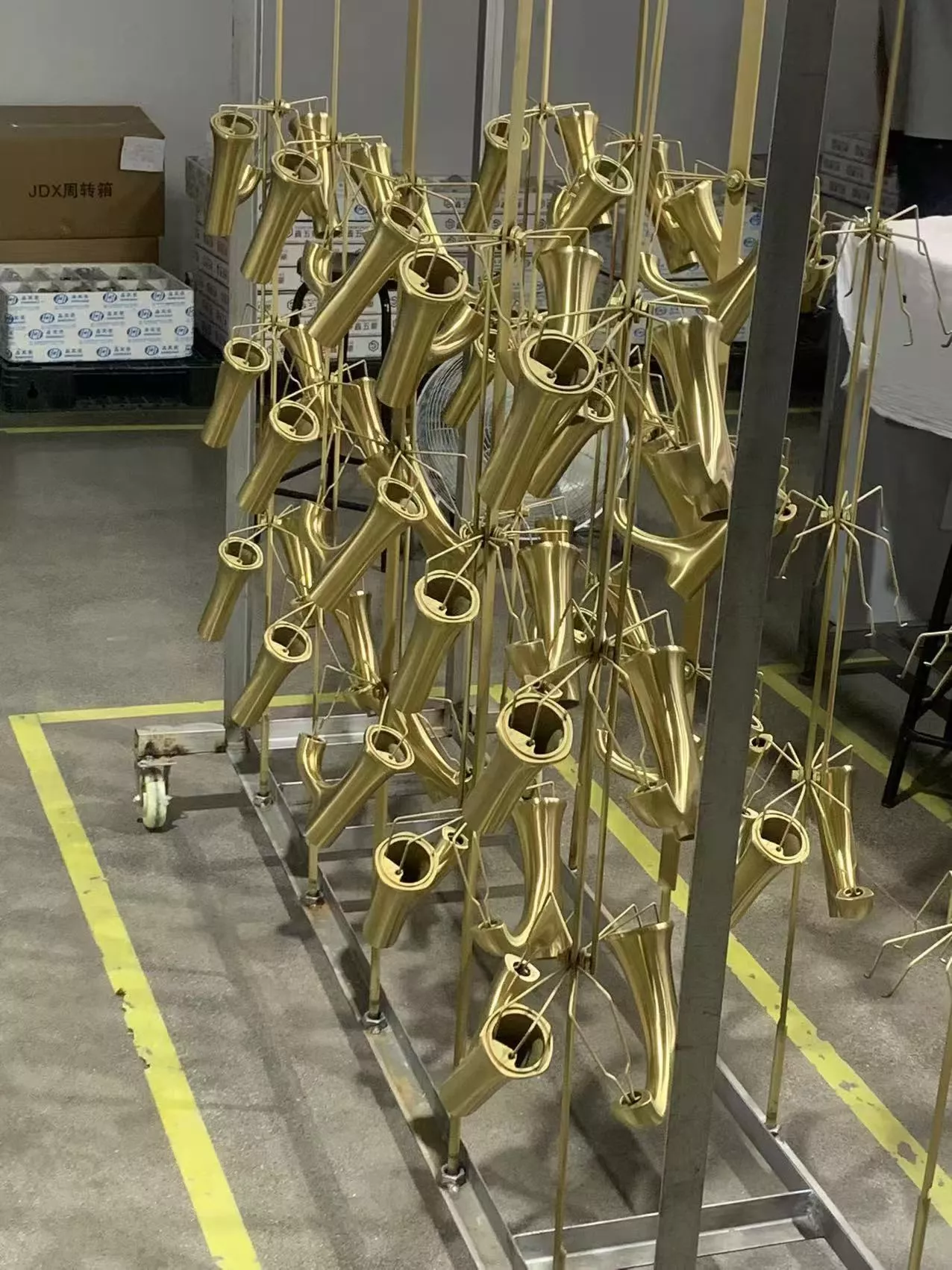
On a bathroom or exterior handle, corrosion performance is decided by the finish. Every extra party in the chain is another transfer, another chance of handling damage, and another party to argue with when a salt-spray report comes back short. Ask whether the polishing, plating, PVD and painting lines are on site, or subcontracted to a neighbour.
Who owns the toolroom
The die sets the tolerance, the surface and the die life. A supplier with in-house mould design and fabrication can make a design change without waiting in someone else’s queue. More importantly, the same team can hold one datum scheme from the die through to the finished part, rather than discovering at assembly that two vendors disagreed about which face was the reference.
Whether they assemble, or only cast
A lever set is a stack of tolerances: casting, machining, polishing, plating, then spindles, springs, rosettes and fasteners on the assembly line. Ask how many components are assembled in-house and whether the fixtures are built and maintained on site. A caster who ships loose components is not a hardware supplier.
What they test, and how often
This is where most buyers under-specify. At minimum you want neutral salt spray to ASTM B117 or ISO 9227 with a stated hours-to-white-rust and hours-to-red-rust target for the finish you are buying, a corrosion classification to EN 1670 where European building hardware standards apply, and cycle or abuse testing against the standard for the product family. Lever handle furniture is EN 1906. Locks fall under the applicable ANSI/BHMA A156 standard for the category. Ask for the report per batch, not a type test from three years ago.
What arrives with the shipment
ISO 9001 is the entry ticket, not the differentiator. What you want is material certification per heat, first-article inspection reports, in-process records and a control plan. Our own quality control process runs CMM measurement, first-article inspection and 100% inspection before shipment, which is the level of documentation a German or US brand will ask for.
Whether they can produce in a second country
Since 2018, tariffs have turned from a cost line into a sourcing question. A supplier running plants in China and Vietnam lets you qualify a second origin for the same part number instead of qualifying a second supplier from scratch. More on our facilities here.
Alloy choice: Zamak 3, Zamak 5, and when to leave zinc alone
Under ASTM B86, hardware work runs on a small number of zinc alloys, and they are not interchangeable on a drawing.
| Alloy | Strength and hardness | Where it belongs |
|---|---|---|
| Zamak 3 (Alloy 3, AG40A, UNS Z33525) | Moderate | Decorative handles, rosettes, escutcheons, covers, faucet trim. Best castability and plating response, most dimensionally stable. The default for anything visible. |
| Zamak 5 (Alloy 5, AC41A, UNS Z35531) | Higher than Zamak 3, slightly less ductile | Load-bearing components: spindles, lever handles under torque, hinges, functional lock parts. |
| ZA alloys (for example ZA-8) | Higher again, better creep resistance | Structural brackets and heavily loaded parts, where aluminium is unsuitable. Needs different casting practice. |
The mistakes are worth naming. Specifying a trade name without the standard, so the alloy becomes whatever the caster happened to have in the furnace that week. And using Zamak 3 on a part that carries torque, simply because it casts and polishes more easily than Zamak 5 does. If a part carries a thread or a sustained load, specify Zamak 5 per ASTM B86 and confirm the mechanical values for the grade you have chosen.
Zinc creeps under sustained load and loses impact strength below 0 °C. For an outdoor part carrying a permanent load, discuss whether aluminium die casting fits better before the tool is cut, not after a field failure.
Finishes, and which one belongs on your part
The finish is the product on hardware. Four options cover most programmes.
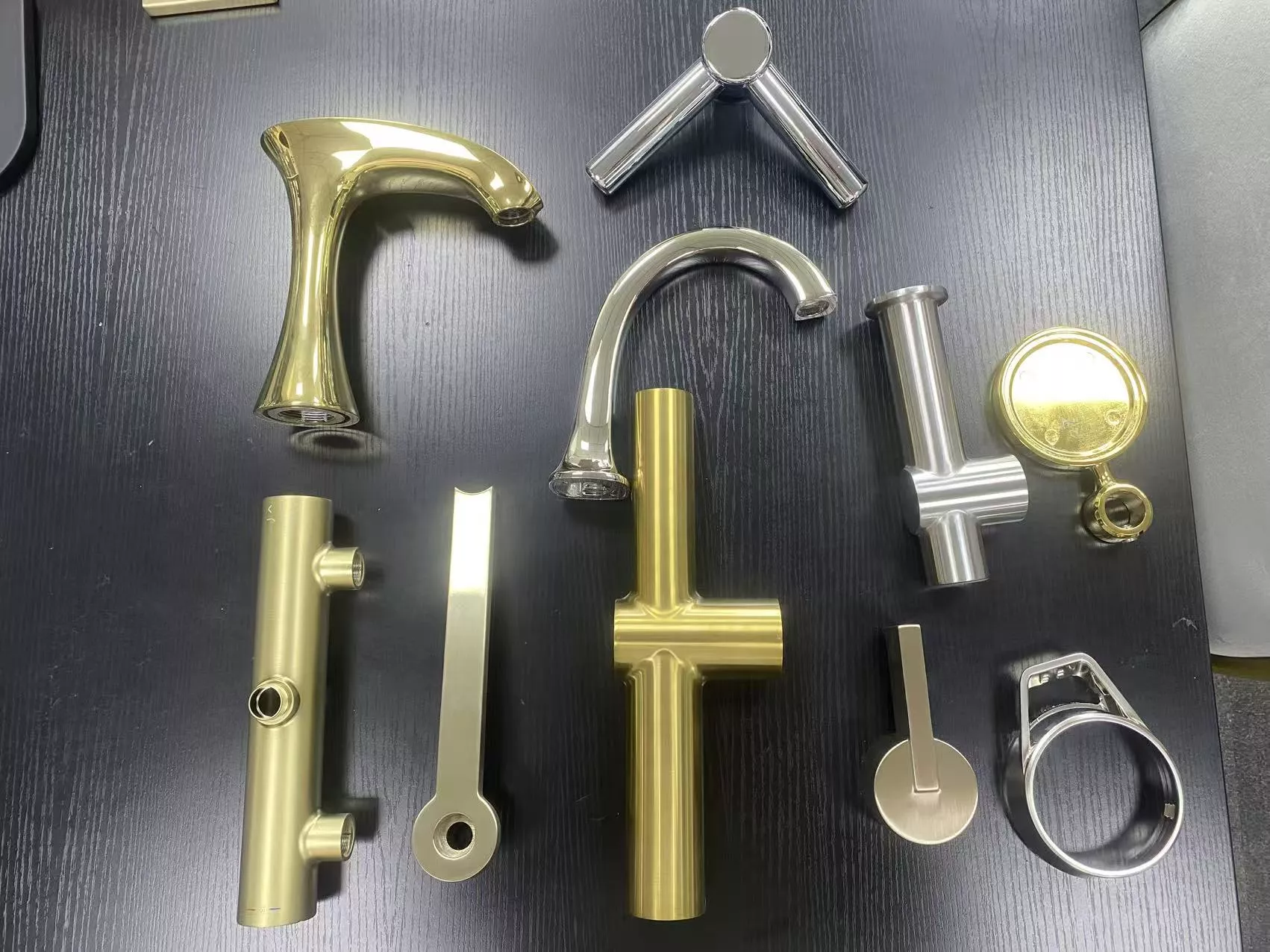
Chrome over a mirror polish is still the reference sanitary look, and it hides nothing. Every polishing mark shows through, which is why the polishing line matters as much as the bath. Satin or brushed nickel is more forgiving of handling and has become the default on modern architectural ranges. PVD gives you the best scratch and wear resistance and the widest decorative colour range, at a higher unit cost, and it still depends on substrate preparation for adhesion. Powder coating covers the widest colour range with RAL and Pantone matching, and builds a thicker layer, so threads and fits need a pre-coat dimension.
Almost every finish complaint we get asked to investigate traces back to the same two places, and neither of them is the plating bath. Plating and coating build-up changes dimensions, so threads, press fits and mating diameters must be specified post-plate; say which dimension is the finished one and let the finishing team control the pre-plate size. And corrosion failure is nearly always preparation failure. Blistering and poor adhesion trace back to polish residue or insufficient pre-treatment, not to the alloy. That is the argument for owning polishing and surface treatment on the same site. Our surface treatment knowledge page goes through the process options in more detail.
What to put in an RFQ
The commercial pack matters as much as the drawing on a hardware programme.
Give the supplier the geometry in whatever form you have, ideally STEP, IGES or a native CAD file, plus a PDF for reference. If there is no electronic model, post a physical sample; a competent supplier will model it and send back DFM comments. Then add alloy and grade, finish type with a RAL or Pantone reference, the salt-spray target, monthly and annual volumes with any planned ramp, packing and labelling requirements, and the standard the finished product has to meet.
Most buyers skip two cheap steps here, and both of them save months. Request a physical colour chip or finish sample before approving anything decorative, because a screen image has never been a colour reference and never will be. And say whether the volume is a new programme or a re-source, since a re-source normally arrives with an existing die that has to be assessed before anyone promises a transfer date.
Vertical integration, step by step
On a hardware programme the value of a single plant shows up as fewer hand-offs. Ours runs in eight steps, all under one roof: DFM review and tooling design, zinc die casting mould manufacture, hot-chamber zinc die casting from parts of 5 g up to 4.5 kg, trimming and de-gating, CNC machining of spindles, bores and sealing faces, polishing to the specified surface, plating, PVD or painting with per-batch salt-spray checks, then assembly and 100% inspection before packing.
The point is not that one plant is always cheaper. It is that one party stays accountable for the datum scheme, the finish and the delivery date.
Why brand buyers split volume between China and Vietnam
Spreading a hardware programme across two origins is normal now, not exotic. It dilutes tariff exposure, keeps a qualified second source warm, and gives you somewhere to move if one region’s logistics tighten.
It only works if both plants run to the same drawing, the same control plan and the same finish specification. Otherwise you have qualified two products that happen to share a part number. That is the difference between a genuine China plus Vietnam footprint and a single-site caster with a trading arm in front of it.
The programmes we run
Zinc alloy has been our whole business for two decades, and the parts we are proudest of are the dull ones: handles and lock components that have run for years without generating a warranty claim. One plant sits in Fujian, one in Vietnam. Both are audited to ISO 9001 and both are held to German and US quality requirements, because a part made in one has to be interchangeable with the part made in the other.
TOTO and KOHLER sit on our bathroom fixture programmes. Master of Italy is our client for door and window fittings, locks and bathroom fixtures. The case studies show how those programmes are structured, and the equipment list shows the capacity behind them. If your range covers locks, handles or sanitary trim, the product pages below are the closest references: zinc alloy locks, door lock parts, door handles, lock fittings, zinc alloy faucets and bathroom accessories.
Frequently asked questions
Are you a manufacturer or a trading company?
We are a factory. Our tooling, die casting, machining, polishing, powder coating and plating workshops are ours, which is what lets us control the finish and the dimensional stack-up of an assembly.
What are the lead times?
Mould manufacturing generally takes 20 to 30 days. OEM parts then take 15 to 30 days depending on quantity. Once the mould is built we provide samples for approval before mass production.
We do not have a 3D model. Can you still quote?
Yes. Send a physical sample and we will complete the model, then return DFM comments with the quotation.
Can you match an existing finish?
Send the physical part or a RAL/Pantone code and ask for a colour chip before you approve anything. We would rather spend a week on a chip than a month on a rejected shipment.
What are your payment terms?
Our standard terms are T/T. Tooling is 50% with the order and 50% against sample approval. Mass production is 50% with the order and 50% against the B/L copy. Other terms are open to discussion.
Start with the drawing, or with a sample
Send us the part as it exists today, whether that is a STEP file, a PDF drawing or a sample in an envelope, and tell us the volume and the finish you have in mind. We will come back with DFM comments and a price, and we will tell you where we think the design will cost you money.
Request a quotation · Quality control · Surface treatment · Assembly · Zinc alloy material information