What Grade of Zinc Alloy is Best for Custom Safe Door Locks? A Buyer’s Guide to Security & Performance
In the world of physical security, the integrity of a safe door lock is non-negotiable. For procurement officers, product designers, and security hardware brands, selecting the material for these critical components is a decision that impacts total cost, supply chain logistics, and end-user safety.
While steel has traditionally been the go-to material, modern zinc alloy die casting has emerged as the superior choice for manufacturing complex, high-precision lock mechanisms. But not all zinc alloys are created equal. If you are sourcing custom safe lock components, understanding the nuances between alloys like Zamak 3, Zamak 5, and Zamak 2 is key to balancing cost with performance.
Here is your data-driven guide to selecting the best zinc alloy for custom safe door locks.
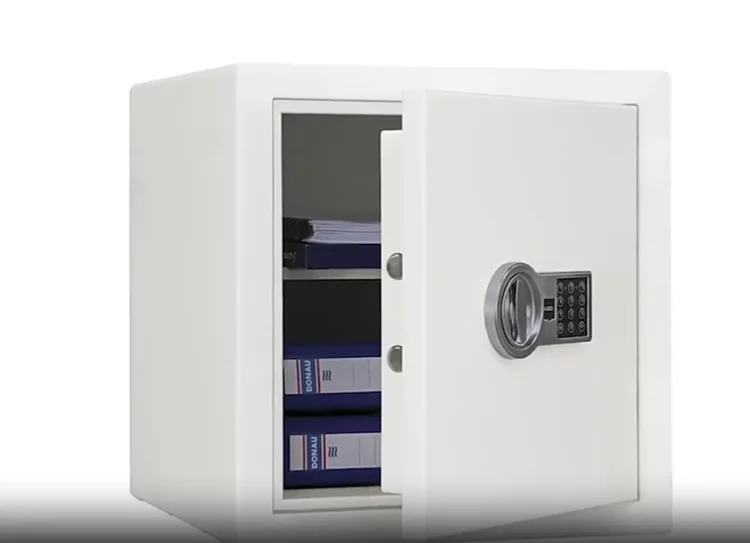
Zinc Alloy Safe Lock
Why Zinc Alloy Die Casting? The Procurement Perspective
Before diving into specific grades, it is important to understand why the international market is shifting from machined steel to zinc alloy die casting for lock components .
From a procurement standpoint, zinc alloy die casting offers:
-
Near-Net Shape Manufacturing: Complex geometries (like internal lock housings and gear mechanisms) are formed in a single step, drastically reducing secondary machining costs .
-
Total Cost of Ownership (TCO): While raw material prices fluctuate, the efficiency of die casting lowers per-part costs at medium to high volumes .
-
Logistical Savings: Zinc alloys are approximately 16% lighter than steel. For international shipping, this directly reduces the chargeable weight and freight costs .
However, to leverage these advantages for a safe door lock, you must specify the correct alloy grade.
Comparing the Contenders: Zamak 3, 5, and 2
For high-security applications like safes, three primary alloys dominate the market. Each offers a unique balance of strength, ductility, and hardness. The table below breaks down the mechanical properties according to industry standards .
| Property | Zamak 3 (Standard) | Zamak 5 (High Strength) | Zamak 2 (Highest Strength) |
|---|---|---|---|
| Tensile Strength (MPa) | 270–280 | 380–400 | 410–425 |
| Yield Strength (MPa) | 220 | 250 | 360 |
| Elongation (%) | ~10 | ~7 | ~3 |
| Hardness (Brinell) | 80 | 90 | 105 |
| Copper Content | None | 1% | 3% |
| Best Application | Standard Housings | Load-Bearing Components | High-Stress Internal Parts |
1. Zamak 3: The Industry Workhorse
For non-critical structural parts—such as decorative bezels, keyhole covers, or outer lock housings—Zamak 3 is the most cost-effective choice. It offers excellent fluidity for filling thin walls during the zinc alloy die casting process and provides superior surface finish for plating or painting . However, its lower strength makes it less ideal for parts that will endure direct attack.
2. Zamak 5: The Recommended Standard for Safe Locks
If you are manufacturing a standard commercial or residential safe lock, Zamak 5 is likely your optimal choice. The addition of copper (approx. 1%) increases tensile strength by nearly 40% compared to Zamak 3 .
This is the alloy that won the prestigious Zinc Die-Cast Award 2024 in the Security & Locking Technology category. The “Roto Safe A | Tandeo” multipoint lock uses the ZP0410 (Zamak 5) alloy for its automatic power wedge, which is fundamental to achieving resistance classes RC 2 and RC 3 (break-in resistance) according to EN 1627 .
For procurement, this means: Zamak 5 provides the mechanical strength to resist prying and impact forces while maintaining the corrosion resistance required for long-term reliability in the field .
3. Zamak 2: For Maximum Security and Wear Resistance
For high-security safes, vaults, or components that require maximum hardness and minimal creep over decades, Zamak 2 is the premium solution. With the highest copper content, it offers the best strength and wear resistance of the Zamak family .
This is particularly suited for rotating cams, gear mechanisms inside the lock, and heavy-duty locking bolts . Its rigidity ensures that under extreme torque (e.g., drilling or forced turning), the component resists deformation. While it has lower ductility (meaning it is less flexible), its sheer hardness provides a formidable barrier against physical attacks.
Addressing the “Security” Debate: Strength vs. Weight
There is a persistent myth in the lock industry that “heavier is stronger,” leading some buyers to default to solid steel. Modern engineering debunks this. True security comes from intelligent design and material science .
Zinc alloy die casting allows engineers to design complex internal reinforcing ribs within a lock component that would be impossible to machine in steel. This means a Zamak 5 lock component can achieve equivalent or superior rigidity to a heavier, bulkier steel part .
Furthermore, for safe door locks used in corrosive environments (like coastal areas or industrial facilities), zinc alloys offer inherent atmospheric corrosion resistance. When combined with proper plating (such as chrome or nickel), components can withstand rigorous ASTM B117 salt spray tests for over 500 hours, far outlasting untreated steel which rusts quickly .
Quality Control: What Buyers Must Verify
When sourcing custom zinc alloy die casting for safe locks, specifications on paper must match the delivered product. Here is what to demand from your supplier:
-
Porosity Control: Lock components must be pressure-tight. Ensure your supplier uses high-quality H13 tooling and optimized processes to keep porosity below 0.5% . Critical parts may require X-ray inspection to verify internal integrity.
-
Precision Tolerances: Lock mechanisms rely on smooth operation. Verify that your foundry can hold tolerances of ±0.02 mm on critical mating parts like tumblers and pins .
-
Material Certification: Insist on certification confirming the alloy meets ASTM B86 or ISO 301 standards. Avoid secondary smelters that may introduce impurities, which can ruin electroplating and cause brittle failure .
-
Surface Finish: The best alloy is useless if the finish fails. For safe locks, confirm your supplier offers post-processing like barrel finishing (achieving Ra ≤ 1.6 µm) and can apply RoHS/REACH-compliant platings .
Conclusion: Making the Smarter Sourcing Decision
For custom safe door locks, the “best” material balances security, weight, and cost-efficiency.
-
Choose Zamak 3 for simple, low-stress internal covers or cosmetic parts.
-
Choose Zamak 5 as your go-to alloy for robust, load-bearing safe lock components that meet international security standards .
-
Choose Zamak 2 for critical high-wear parts in high-security vaults.
By partnering with an experienced zinc alloy die casting manufacturer, you move beyond simply buying parts. You invest in engineering expertise that optimizes your product for success.
Ready to discuss your next project?
Contact our engineering team-STICK INDUSTRY today for a free design-for-manufacturing review and a competitive quote on custom safe lock components.