If you’re in the middle of developing a new faucet line, a high-end lock series, or a precision medical housing, you’ve probably already faced the material choice headache. Aluminum? Brass? Injection-molded plastic? Each has its fans, but over the past decade, I’ve watched more and more product engineers quietly gravitate toward zinc die casting — and specifically toward zinc alloy die casting — once they understand what the process actually unlocks. It’s not just about making parts; it’s about making parts that are easier to finish, cheaper to scale, and far more dimensionally predictable than almost any alternative.
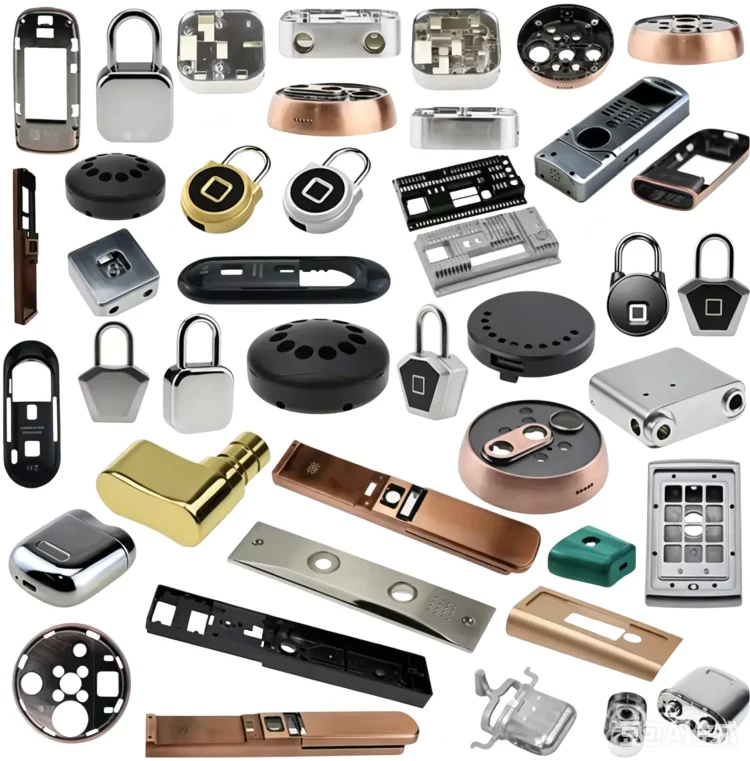
zinc alloy die-casting factory in China/Vietnam, capable of custom-producing lock parts.
Let me walk through what matters in real product development, not just on a datasheet.
You Get to Design for Function, Not Just for Manufacturability
One of the quiet frustrations in hardware development is having to dumb down a design because the chosen material can’t hold the detail. With high pressure zinc die casting, that compromise largely disappears. Zamak alloys flow into a steel die at high velocity, filling walls as thin as 0.5 mm and replicating crisp lettering, knurling, or intricate logo details in a single shot. We’ve produced zinc die cast parts for bathroom fittings where the internal water channels and the external decorative grooves were formed simultaneously, eliminating multiple secondary operations. For procurement teams, this directly translates to fewer suppliers, fewer assembly steps, and a shorter bill of materials.
The Surface Finish Conversation Starts Earlier — and Ends Better
Anyone who’s sent a raw aluminum casting out for chrome plating knows the heartbreak of getting back parts peppered with pits and blistering. Coating for zinc die cast components is a completely different experience. Zamak’s natural affinity for electroplating means a properly pre-treated zinc die cast part can achieve a mirror-bright chrome, satin nickel, or even a PVD brass finish that looks indistinguishable from a solid brass equivalent — at a fraction of the weight and cost. That’s why mid-to-high-end sanitary ware brands insist on zinc die casting components for handles, spouts, and escutcheons: the plating takes beautifully, the corrosion resistance is proven, and the tactile heft conveys quality no plastic part can fake.
Strength That Doesn’t Require a Trade-off with Weight
A common myth is that zinc is just a cheap, heavy metal with no mechanical credentials. In practice, die casting zinc alloy grades like Zamak 3 and Zamak 5 offer tensile strengths comparable to aluminum alloys, with superior impact strength and ductility. For a lock housing or a medical device handle, that means the part can withstand a drop test without cracking, while still being thin-walled enough to keep the overall assembly compact. Compared to brass, a die cast zinc alloy component will be lighter and often machine faster, reducing tool wear on your CNC operations downstream.
The Economics Actually Work at Scale — and Even at Medium Volumes
Product managers often worry that tooling for die casting is too expensive. The truth is more nuanced. For custom zinc die casting, the initial tool investment is indeed higher than a stamped steel part, but the per-piece cost drops steeply once you hit a few thousand units. More importantly, that tooling tends to last. A well-maintained zinc die casting die can reliably produce hundreds of thousands of shots before major refurbishment, spreading the upfront cost across a long production life. When you look for zinc die casting services, ask about total cost of ownership rather than just unit price. Many zinc alloy die casting parts manufacturers will guide you through a cost model that factors in consolidation of parts — one complex zinc die cast assembly can replace multiple machined components held together with fasteners.
Miniature Assembly Consolidation Is the Hidden Superpower
Speaking of assemblies, this is where zinc die cast assemblies save serious money in subtle ways. Because the die casting process allows you to form threads, undercuts, and snap-fit features directly into the part, you can design a single casting that integrates mounting bosses, alignment pins, and even hinge elements. I’ve seen projects where a seven-piece welded steel bracket became a single zinc die cast piece, slashing assembly labor and eliminating weld quality issues. If you work with a zinc die cast manufacturer who offers in-house CNC and finishing, the entire chain from raw alloy to ready-to-install zinc die casting components stays under one roof — one contact person, one quality report, one shipment.
Sustainability Narratives Are Easier to Build
European and North American brands are under increasing pressure to document the recyclability of their products. Zinc alloys are fully recyclable without loss of mechanical properties, and the die casting process itself generates very little waste — sprues and runners are simply remelted on-site. When your marketing team needs to tell an eco-conscious story, specifying zinc die cast parts gives them credible data to back it up.
Finding the Right Partner Is Part of the Development Benefit
None of these advantages matter if your zinc die cast company doesn’t understand your end market. The best zinc die cast manufacturer for a high-end European faucet brand will have in-house electroplating that’s REACH and RoHS compliant, polishing lines that deliver a consistent satin grain, and engineers who can suggest minor gate adjustments to prevent a plating shadow on a visible surface. That’s exactly the kind of integrated setup you should be looking for — not a casting shop that sends everything out and hopes for the best.

If you’re at the stage where you’re comparing manufacturing processes for a new product, and the words zinc die casting services keep showing up in your search history, it’s probably for good reason. The combination of precision, finish quality, assembly consolidation, and long-term cost efficiency is genuinely hard to beat. We’ve been doing exactly this for global brands in sanitary ware, locks, and medical equipment, with everything from zinc die casting and CNC machining to PVD coating and powder coating managed under our own roof in Xiamen and Hanoi.
Feel free to reach out — we can share some plated samples and talk through how zinc die cast could simplify your next development cycle. let’s inquiry for XIAMEN STICK INDUSTRY CO., LTD