Understanding the Real Cost of Zinc Alloy Die Casting in China
When overseas buyers request a quotation for zinc alloy die casting parts from China, the first question is usually simple:
“How much will the finished product cost?”
However, the answer is not determined by material weight alone. Unlike purchasing standard metal components, zinc alloy die casting pricing depends on multiple factors, including mold investment, part design, production volume, surface finishing requirements, and quality standards.
For example, a small zinc alloy decorative fitting and a complex lock housing may both use Zamak alloy, but their final prices can be completely different. The difference comes from tooling complexity, machining requirements, finishing processes, and production efficiency.
For European and North American buyers, understanding the cost structure before selecting a supplier can help avoid unexpected expenses and make better sourcing decisions.
This guide explains the main factors affecting Zinc Alloy Die Casting Cost in China, including tooling costs, material costs, surface treatment expenses, and practical ways to reduce manufacturing costs.
Based on the experience of STK INDUSTRY, a China-based manufacturer specializing in zinc alloy die casting, CNC machining, polishing, and electroplating, we will provide a practical overview of how Chinese suppliers calculate zinc die casting prices.
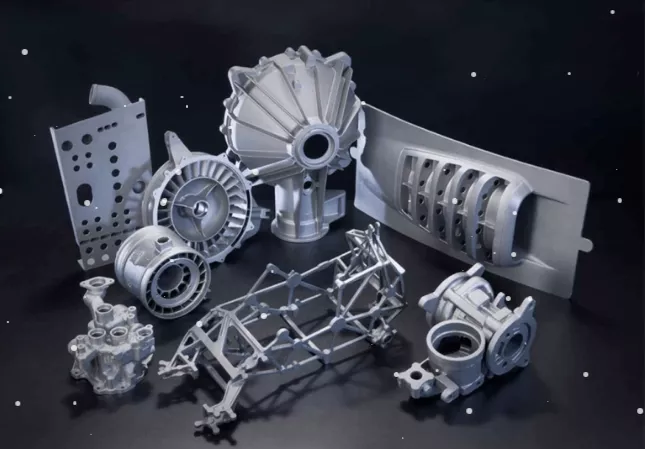
zinc die casting
What Factors Affect Zinc Alloy Die Casting Cost?
The quotation for a zinc alloy die casting project is usually based on four major factors:
- Raw material cost
- Product design complexity
- Mold and tooling investment
- Surface finishing requirements
Each factor affects the final unit price. A well-designed part can reduce not only the mold cost but also production time, scrap rate, and finishing expenses.
1. Raw Material Cost of Zinc Alloy Die Casting
The first factor affecting Zinc Die Casting Cost is the price of zinc alloy material.
Most zinc die casting parts use Zamak alloys, especially:
- Zamak 3
- Zamak 5
- ZA alloys
Among them, Zamak 3 is widely used because it provides:
- Excellent casting performance
- Good dimensional stability
- Smooth surface quality
- Excellent plating performance
The price of zinc alloy ingots is linked to global zinc market fluctuations, including LME (London Metal Exchange) prices.
In addition to the material inside the final product, buyers should also consider:
- Runner system
- Overflow material
- Biscuit material
- Casting waste
For example, a part with a finished weight of 150g may require 200g or more of molten zinc alloy during production.
The material utilization rate is therefore an important factor.
A well-designed mold and gating system can significantly improve material efficiency, while poor design may increase raw material consumption and production waste.
2. Part Design and Complexity Influence Zinc Die Casting Price
Product design has a direct impact on both tooling cost and production cost.
When a China die casting supplier reviews a new project, engineers normally evaluate:
- Wall thickness
- Draft angle
- Undercuts
- Internal structures
- Dimensional tolerance
- Surface requirements
Simple parts with a uniform structure are easier and cheaper to manufacture.
For example:
A simple zinc alloy cover plate with flat surfaces requires less tooling complexity compared with a door lock housing containing:
- Internal ribs
- Sliding mechanisms
- Thread structures
- Tight assembly requirements
Common design factors that increase Zinc Alloy Die Casting Price include:
Thin Wall Design
Parts below approximately 0.8mm require higher injection speed and better mold design.
Undercuts
Undercuts require additional components such as:
- Slides
- Lifters
- Special mold inserts
These increase mold cost and maintenance requirements.
Tight Tolerances
High precision requirements may require:
- Better mold machining accuracy
- Additional CNC machining
- More inspection procedures
Working with an experienced zinc alloy die casting manufacturer during the design stage can help optimize the structure before mold production begins.
3. Zinc Alloy Die Casting Mold Cost
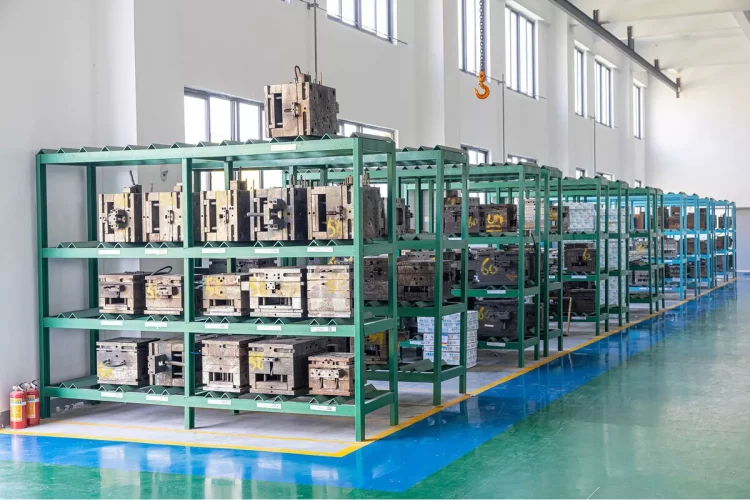
Die casting mold
For most custom die casting projects, the Die Casting Mold Cost is the biggest initial investment.
Unlike CNC machining, where production can start directly from drawings, die casting requires a dedicated steel mold.
In China, zinc die casting mold costs usually depend on:
- Part size
- Mold structure
- Number of cavities
- Expected production quantity
- Mold steel selection
Typical price ranges:
| Mold Type | Estimated Cost |
|---|---|
| Simple single-cavity mold | $2,000-$4,000 |
| Medium complexity mold with slides | $5,000-$10,000 |
| Multi-cavity production mold | $12,000-$25,000+ |
For example:
A mold costing $8,000 may seem expensive at the beginning. However, if the annual production volume reaches 100,000 pieces, the tooling cost becomes only $0.08 per part.
This is why die casting becomes more economical for medium and high-volume production.
For prototype or low-volume projects, buyers may consider:
- Soft tooling
- Prototype casting
- Lower cavity molds
to reduce initial investment.
4. Surface Finishing Cost of Zinc Alloy Parts
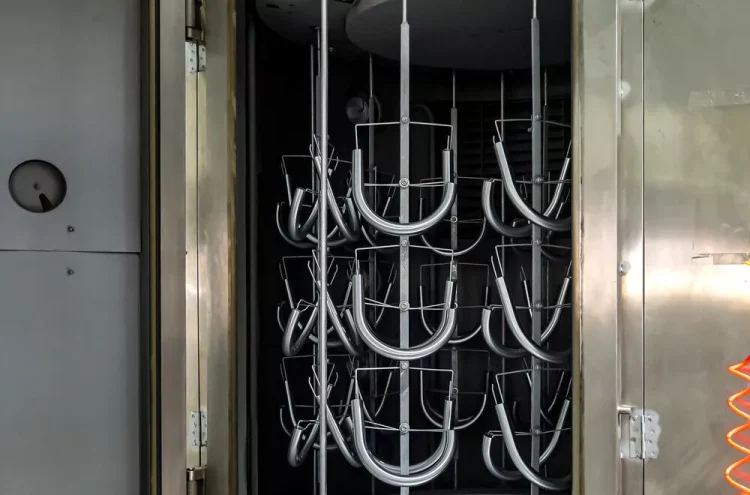
ZINC DIE CASTING MANUFACTURE PVD COATING
For many zinc alloy products, especially bathroom hardware, furniture fittings, and decorative components, surface finishing can represent a significant percentage of the final cost.
Unlike industrial parts where appearance may be less important, consumer products require:
- Smooth surface
- Good color consistency
- Strong corrosion resistance
- Long-term durability
Common finishing processes include:
Vibratory Deburring
Cost:
Approximately $0.05-$0.15 per piece
Used for:
- Removing sharp edges
- Improving surface smoothness
Mechanical Polishing
Cost:
Approximately $0.30-$0.80 per piece
Used for:
- Faucets
- Handles
- Decorative hardware
Electroplating
Common coatings:
- Chrome plating
- Nickel plating
- Antique brass plating
Typical cost:
$0.20-$0.60 per square decimeter
PVD Coating
Cost:
Approximately $0.50-$1.50 per piece
Used for premium products requiring:
- Gold color
- Black finish
- High wear resistance
Powder Coating / Painting
Cost:
Approximately $0.10-$0.40 per piece
For buyers of sanitary ware and hardware products, surface quality is often more important than the casting process itself.
A supplier with in-house polishing and electroplating capability can provide better quality control and reduce communication problems between different factories.
At STK INDUSTRY, integrating zinc alloy die casting with polishing, electroplating, CNC machining, and inspection allows customers to manage the complete manufacturing process through one supplier.
Zinc Alloy Die Casting Cost Breakdown: From Mold to Finished Parts
Understanding the cost structure of zinc alloy die casting helps buyers evaluate supplier quotations more accurately.
Many first-time buyers focus only on the material weight or unit price. However, the final price of a zinc die cast component includes multiple production stages:
- Raw material
- Die casting process
- Trimming and deburring
- CNC machining (if required)
- Surface treatment
- Quality inspection
- Packaging
- Tooling amortization
For example, a bathroom handle made from Zamak 3 may have a relatively low material cost, but polishing and chrome plating can represent a significant portion of the final price.
Below is an example of a medium-complexity zinc alloy bathroom handle.
Product Example:
- Material: Zamak 3 zinc alloy
- Finished weight: 150g
- Order quantity: 10,000 pcs/year
- Surface treatment: Chrome plating
| Cost Item | Unit Cost (USD) | Percentage |
|---|---|---|
| Zinc alloy material (gross weight 220g) | $0.68 | 18% |
| Die casting process (machine, labor, energy) | $0.45 | 12% |
| Trimming and deburring | $0.10 | 3% |
| Mechanical polishing | $0.50 | 13% |
| Chrome electroplating | $0.55 | 15% |
| Quality inspection & packaging | $0.15 | 4% |
| Mold amortization ($8,000 ÷ 50,000 pcs) | $0.16 | 4% |
| Factory overhead and production management | $1.15 | 31% |
| Estimated ex-factory price | $3.74 | 100% |
Note: Actual pricing depends on product structure, annual quantity, finishing requirements, and supplier capability.
This example demonstrates why Custom Zinc Alloy Die Casting Service cannot be calculated simply by multiplying product weight by material price.
For decorative and consumer products, surface finishing and quality control often have a greater impact on cost than the zinc alloy itself.
How to Reduce Zinc Alloy Die Casting Manufacturing Costs?
Reducing production costs does not always mean choosing the cheapest supplier.
A lower quotation may result in:
- Poor mold design
- Higher scrap rate
- Unstable plating quality
- Shorter mold life
- Additional repair costs
The best approach is to optimize the product design and manufacturing process before mass production.
Here are practical methods used by experienced buyers:
1. Optimize Product Design Before Mold Making
The design stage has the biggest influence on future production costs.
Before creating the mold, engineers should review:
- Wall thickness
- Rib structure
- Draft angles
- Assembly methods
- Machining requirements
For example, removing unnecessary material from a part can reduce:
- Zinc consumption
- Cycle time
- Cooling time
- Mold wear
A professional China die casting supplier usually provides DFM (Design for Manufacturing) suggestions before tooling begins.
2. Reduce Unnecessary Mold Complexity
Every additional mold component increases investment.
Examples:
- Slides
- Lifters
- Inserts
- Special cooling channels
Although these features may sometimes be necessary, unnecessary complexity increases:
- Mold cost
- Maintenance requirements
- Production downtime
A good supplier will help find the balance between product function and manufacturing efficiency.
3. Select the Right Zinc Alloy Material
Different zinc alloys provide different performance characteristics.
Zamak 3
Advantages:
- Excellent casting flow
- Good dimensional stability
- Easy surface finishing
Common applications:
- Bathroom hardware
- Furniture fittings
- Electronic housings
Zamak 5
Advantages:
- Higher strength
- Better hardness
Applications:
- Mechanical components
- Structural parts
ZA Series Alloys
Advantages:
- Higher load capacity
- Better wear resistance
Applications:
- Industrial components
Choosing the correct alloy prevents unnecessary material upgrades and helps control cost.
4. Increase Production Volume
Die casting becomes more cost-effective as production quantity increases.
The reason is simple:
Initial costs such as:
- Mold investment
- Engineering development
- Testing
are distributed across more parts.
For example:
A $8,000 mold:
| Production Quantity | Tooling Cost Per Piece |
|---|---|
| 5,000 pcs | $1.60 |
| 50,000 pcs | $0.16 |
| 200,000 pcs | $0.04 |
For long-term projects, providing an annual forecast allows a Zinc Alloy Die Casting Manufacturer China to optimize production planning and offer better pricing.
5. Combine Multiple Manufacturing Processes With One Supplier
For zinc alloy products, outsourcing different processes to separate suppliers may create additional costs.
A typical supply chain may involve:
- Mold manufacturer
- Die casting factory
- CNC machining supplier
- Polishing supplier
- Electroplating supplier
- Assembly factory
Each additional supplier increases:
- Transportation cost
- Communication time
- Quality risks
Working with a manufacturer that provides integrated services can simplify management.
At STK INDUSTRY, customers can combine:
- Zinc alloy die casting
- Aluminum die casting
- CNC machining
- Polishing
- Electroplating
- Quality inspection
under one production system.
China vs Europe Zinc Alloy Die Casting Cost Comparison
For European buyers, one of the most common questions is:
“Why do many companies source zinc die casting parts from China instead of producing locally?”
The answer is not only labor cost.
China has developed a complete manufacturing ecosystem covering:
- Mold manufacturing
- Die casting equipment
- Surface finishing
- CNC machining
- Export logistics
This integrated supply chain reduces both production cost and communication complexity.
A general comparison:
| Cost Factor | China | Europe |
|---|---|---|
| Medium complexity mold | $5,000-$10,000 | $15,000-$35,000 |
| Die casting production cost | Lower | Higher |
| Polishing & plating | More competitive | Higher labor cost |
| Engineering support | $25-$45/hour | $80-$150/hour |
| Typical tooling lead time | 20-30 days | 40-60 working days |
Why China Remains Competitive for Zinc Die Casting Production
1. Complete Supply Chain
A major advantage of China is the connection between different manufacturing processes.
A zinc die casting factory can usually access:
- Mold steel suppliers
- CNC machining services
- Surface treatment factories
- Packaging suppliers
within a short distance.
This improves production efficiency and reduces delays.
2. Experienced Manufacturing Teams
China has produced zinc alloy components for decades, especially for industries such as:
- Bathroom hardware
- Door locks
- Furniture accessories
- Automotive components
- Electronics
This experience helps manufacturers solve common problems including:
- Porosity
- Surface defects
- Plating adhesion issues
- Dimensional variation
3. Flexible Production Capability
Chinese suppliers can support different project stages:
- Prototype development
- Small trial production
- Medium-volume production
- Large-scale manufacturing
This flexibility is valuable for overseas brands launching new products.
How to Choose a Reliable Zinc Alloy Die Casting Manufacturer in China?
Finding a competitive quotation is only the first step. For overseas buyers, choosing the right Zinc Alloy Die Casting Manufacturer China is more important than simply selecting the lowest price.
A supplier with poor process control may offer a lower initial quotation, but problems such as:
- Unstable dimensions
- Surface defects
- Poor plating adhesion
- Delayed delivery
- High rejection rates
can create much higher costs later.
When evaluating a potential China die casting supplier, buyers should consider the following factors.
1. Check the Manufacturer’s Production Capability
A professional zinc alloy die casting supplier should have experience with the complete manufacturing process.
Important capabilities include:
Die Casting Production
Check:
- Machine tonnage range
- Production capacity
- Experience with similar products
- Quality control during casting
Different products require different machine sizes. For example:
- Small hardware parts may use smaller hot chamber die casting machines.
- Larger industrial components may require higher-tonnage equipment.
A supplier with suitable equipment can improve efficiency and reduce production waste.
2. Evaluate Mold Design and Engineering Support
The mold is the foundation of zinc alloy die casting production.
A reliable manufacturer should be able to support:
- Product design review
- DFM analysis
- Mold flow evaluation
- Prototype improvement
- Tooling optimization
Before making the mold, experienced engineers should review possible problems such as:
- Air entrapment
- Shrinkage
- Difficult ejection areas
- Uneven filling
Good mold design helps improve:
- Product appearance
- Mold lifespan
- Production stability
- Overall cost efficiency
3. Pay Attention to Surface Finishing Capability
For many zinc alloy products, especially bathroom hardware and decorative components, surface quality directly affects the customer’s perception of the product.
Common problems caused by poor finishing include:
- Blistering after plating
- Color inconsistency
- Peeling coating
- Corrosion issues
A capable supplier should have strict control over:
- Polishing process
- Electroplating quality
- Surface inspection
- Adhesion testing
For European sanitary ware buyers, suppliers should understand requirements related to:
- Corrosion resistance
- Chemical compliance
- Long-term appearance durability
4. Confirm Quality Control Procedures
A professional supplier should have a clear inspection system throughout production.
Typical quality control includes:
Incoming Material Inspection
Checking:
- Zinc alloy composition
- Raw material certificates
- Supplier qualification
During Production Inspection
Monitoring:
- Casting parameters
- Product dimensions
- Surface defects
Final Inspection
Including:
- Appearance inspection
- Dimension measurement
- Function testing
- Packaging inspection
For precision components, additional equipment may include:
- CMM measurement machines
- Projectors
- Salt spray testing equipment
A reliable supplier should provide inspection reports when required.
5. Consider Export Experience
Manufacturing capability alone is not enough.
A supplier experienced in international markets should understand:
- Export documentation
- International packaging requirements
- Customer communication standards
- Quality expectations from overseas buyers
For European and North American customers, experience with different market requirements can reduce project risks.
Why Choose STK INDUSTRY for Zinc Alloy Die Casting Production?
For buyers searching for a long-term manufacturing partner, STK INDUSTRY provides an integrated solution from product development to finished components.
Our manufacturing services include:
- Zinc alloy die casting
- Aluminum alloy die casting
- Gravity die casting
- CNC machining
- Polishing
- Electroplating
- Quality inspection
- Customized packaging
This integrated production model helps customers reduce communication between multiple suppliers and maintain better quality control.
For industries including:
- Bathroom hardware
- Sanitary ware components
- Door locks
- Furniture fittings
- Industrial accessories
STK INDUSTRY supports OEM and customized manufacturing projects from prototype development to mass production.
Frequently Asked Questions About Zinc Alloy Die Casting Cost in China
1. How much does zinc alloy die casting cost in China?
The cost depends on:
- Product weight
- Mold complexity
- Order quantity
- Surface finishing requirements
- Quality standards
Small zinc alloy components may cost less than $1 per piece, while complex decorative or functional parts with plating may cost several dollars or more.
The best way to get an accurate price is to provide:
- 2D drawing
- 3D CAD file
- Material requirement
- Surface finish specification
- Annual production quantity
2. How much does a zinc alloy die casting mold cost?
A typical zinc alloy die casting mold in China costs approximately:
- Simple mold: $2,000-$4,000
- Medium complexity mold: $5,000-$10,000
- Complex production mold: $12,000-$25,000+
The final cost depends on:
- Mold size
- Number of cavities
- Slides and inserts
- Expected production life
3. Is zinc alloy die casting cheaper than aluminum die casting?
It depends on the product requirements.
Zinc alloy advantages:
- Lower melting temperature
- Longer mold life
- Better surface finishing
- Excellent dimensional accuracy
Aluminum advantages:
- Lighter weight
- Higher temperature resistance
- Better strength-to-weight ratio
For small and medium-sized decorative components, zinc alloy is often more cost-effective.
4. What information is needed to get a zinc die casting quotation?
A professional supplier normally needs:
Product Information
- 3D drawing
- 2D engineering drawing
- Material requirement
- Surface finish requirement
Production Information
- Annual quantity
- Packaging requirement
- Delivery location
With complete information, suppliers can provide a more accurate quotation.
5. Why do overseas companies choose Chinese zinc die casting suppliers?
Many international buyers choose China because of:
- Competitive manufacturing costs
- Strong mold-making capability
- Complete supply chain
- Flexible production capacity
- Experienced engineering teams
The main advantage is not only price but the ability to combine multiple manufacturing processes in one supply chain.
Conclusion: Understanding Zinc Alloy Die Casting Cost Helps You Make Better Sourcing Decisions
The cost of zinc alloy die casting in China is influenced by much more than raw material prices.
A realistic quotation must consider:
- Product design
- Mold investment
- Casting efficiency
- Surface finishing
- Quality control
- Production volume
For overseas buyers, selecting an experienced manufacturer can help reduce unnecessary costs while ensuring stable quality.
A professional Zinc Alloy Die Casting Manufacturer China should not only provide competitive pricing but also support product optimization, tooling development, production control, and long-term cooperation.
At STK INDUSTRY, we help global customers develop and manufacture zinc alloy die casting components with integrated services including die casting, CNC machining, polishing, electroplating, and inspection.
If you have a zinc alloy die casting project, send us your drawings and requirements. Our engineering team can review your design, suggest manufacturing improvements, and provide a detailed quotation for your project.
Contact STK INDUSTRY today to discuss your custom zinc alloy die casting requirements.